About Beth
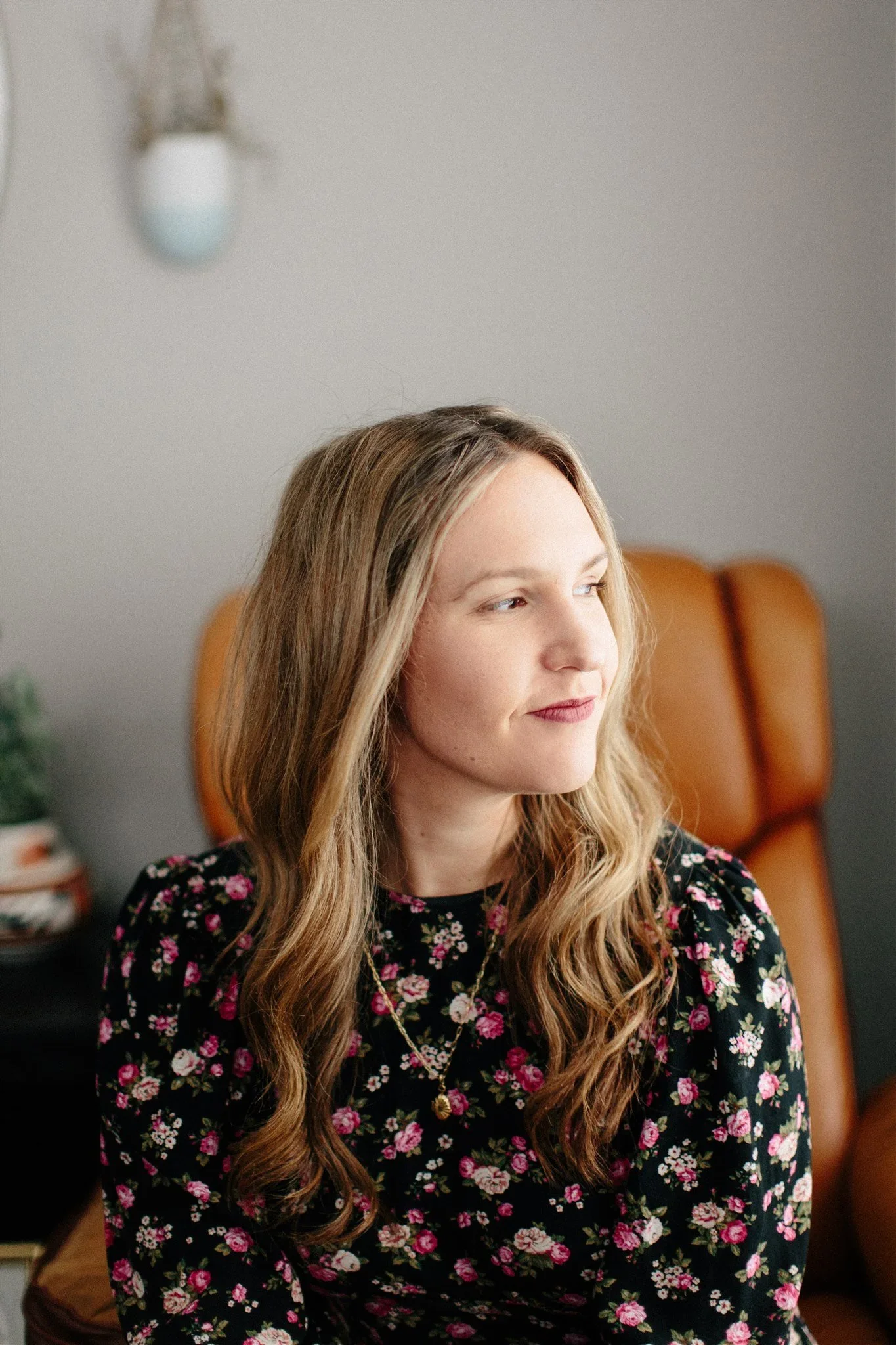
Hi, I'm Beth Broadbooks — a listening professional, affiliate professor at Kairos University, and certified Spiritual Director based in Sioux Falls, South Dakota.
At Kairos, I serve on the teaching team for Listening People to Life, a program that oversees spiritual directors in training. It's work that sits at the heart of everything I do: helping people learn to slow down, stay curious, and create the kind of space where others feel genuinely seen and heard.
My path into this work began long before any credential. In my twenties, I was living in two very different worlds simultaneously. I worked as a personal trainer in a Hollywood gym alongside A-list celebrities and people of incredible means, and I did outreach work on Skid Row and in juvenile detention centers. What struck me, moving between those worlds, was how universal the longing was: to belong, to be seen, to be loved, to be listened to. It didn't matter how much someone had or how little. Those relationships — with people whose lives looked nothing like each other's, or mine — were where I first discovered the transformative power of deep listening.
In 2018, I began my seminary journey, ultimately earning a Master of Divinity and Doctor of Ministry. My doctoral research examined the role of deep listening in bridging division within the Christian church. Alongside these degrees, I hold certification as a Spiritual Director and am engaged in ongoing training through the Center for Courage and Renewal. In 2022, I co-founded People Who See — a spiritual direction practice that journeyed alongside people longing for more in their faith, helping them listen more deeply to God, themselves, and others.
Outside of sessions and cohorts, you can find me hunting for treasures in thrift stores or driving our minivan packed full of children. I've been married to my partner for eight years, and together we have three children.
Core Values
-
Curiosity
Approaching each person and situation with curiosity rather than assumptions
-
Inclusive Community
Building cultures where everyone belongs and is valued
Fostering an environment of radical welcome and acceptance
Creating space for people to show up as their whole selves
-
Courage
Creating brave spaces for vulnerability and truth-telling
-
Depth over speed
Trusting the process and honoring transformation's timeline
Allowing space for reflection, integration, and genuine growth
Understanding that lasting change happens gradually, not instantly

We all need someone to truly listen to us — to be fully seen and heard.
Parker Palmer — contemplative, Quaker, and one of the founders of the Center for Courage and Renewal — has spent decades creating spaces where individuals could be seen, heard, and understood. Through Circles of Trust and other programs, these gatherings are spaces of no fixing, no saving, no advising, no setting each other straight. They are places to simply be present with one another — offering the healing gifts of silence, and when speaking, doing so through powerful questions and reflections rooted in curiosity, love, and compassion.
In his book A Hidden Wholeness, Palmer writes about moving through a deep depression. He describes finding comfort and strength in "those few people who neither fled from me nor tried to save me but were simply present to me."
I was reminded of this not long ago at a large event here in Sioux Falls — hundreds of people milling around, waiting for the event to begin. In the bathroom, I struck up a conversation with a couple of accomplished, high-achieving women, one of them a vice president of a large company in town. We swapped stories and laughed together while fixing our hair and reapplying lipstick.
About an hour into the event, I slipped back into the bathroom. It was empty — except for one woman standing in the corner by the hand dryer, crying. When she lifted her head, I realized it was the same woman I'd connected with before the show. I walked toward her and gently said, "Hi — I'm wondering if you need a friend, or if you'd rather be alone." Through her tears, mascara running down her cheeks, she said, "I would like a friend."
"Why don't we step outside? It's a nice night," I suggested.
We walked out together and sat down on the concrete steps. For the next twenty minutes, she let it out — the pain and grief she had been carrying after losing her father. I was struck by what her vulnerability seemed to reveal: that this high-powered, high-achieving woman may not have had many — or any — spaces like this where she could simply break down and be heard.
I did what I try to do in any of my sessions: I listened deeply, stayed fully present, reflected back what I was hearing, validated her experience, and asked a few open-ended questions.
At the end, she looked at me through her tears and said, "Thank you so much for listening to me."
In the cohort I teach, there's an entire section on the power of presence, and one of my favorite tools for exploring it is the beautiful children’s book The Rabbit Listened. I won't give too much away — you should absolutely read it — but at its heart, it illustrates the many ways we instinctively try to fix people or move them through their pain on our own terms. And it gently shows us that the better, harder thing is simply to offer a space of listening and non-judgmental presence: to be fully with someone in their pain.
We live in a world that rewards doing, fixing, and moving forward. But sometimes the most powerful thing we can do is none of those things. Sometimes it's sitting on concrete steps, fully present — and in doing so, giving someone the rarest gift of all: the feeling of not being alone.
FAQs
-
Most of us have plenty of people in our lives who are ready to offer advice, opinions, or a plan. A listening professional does something rarer: they slow down, stay genuinely curious, and create the kind of space where you can hear yourself think, often for the first time. It's a practice rooted in presence, not problem-solving. And in a world that moves very fast, it can be quietly transformative.
-
If you're carrying something you haven't had space to process, whether it's a transition, a decision, a grief, or a question you can't quite articulate, this work is likely for you. You don't need to arrive with a clear goal or a specific problem. Many people come simply because they sense something needs attention, and they want a space to explore it without being told what to do next.
-
Not at all. Some people come with a very clear question they're sitting with. Others come because life feels heavy or uncertain and they're not sure why. Both are welcome. The work begins wherever you are.
-
Sessions are quiet, unhurried, and spacious. You can expect open-ended questions, reflective listening, and grounding contemplative practices, but no agenda imposed on you and no pressure to arrive at a conclusion. The underlying belief is that the answers are already inside you. My role is simply to create the conditions for you to uncover them.
-
A life coach typically offers strategies, frameworks, and action steps — a structured path toward a goal. My work moves at a slower pace and is more open-ended. I'm not here to chart your course or tell you what's next. I'm here to be fully present with you and ask the questions that help you discover what's already within you. If you're looking for accountability and action plans, coaching may serve you well. If you're looking for depth, discernment, and genuine presence, this may be what you're looking for.
-
Therapy is a clinical practice focused on diagnosing and treating mental health concerns, and it's deeply valuable work. That falls outside the scope of what I do. What I offer is a contemplative listening space: a place to process, reflect, and be heard. Many people find that working with me alongside a therapist is a meaningful combination, each serving a distinct role. If I encounter something in our work together that would be better served by a therapist, I'll say so honestly and connect you with trusted professionals I know.
-
I hold a Master of Divinity and a Doctor of Ministry, am a certified Spiritual Director, and am currently completing training through the Center for Courage and Renewal. This work is the intersection of everything I've spent years studying and practicing.
-
I draw from my background in spiritual direction and contemplative practice, particularly the deep listening traditions inspired by Parker Palmer's work on Circles of Trust. While I'm not a Quaker myself, I'm deeply shaped by the commitment to holding space without fixing, advising, or directing. I work inclusively with people of all backgrounds: faith-based, secular, questioning, or somewhere in between.